- Client
- Divyasree Developers
- My role
- Senior Manager, Digital Transformation
- Timeline
- Nov 2025 to now
- Platform
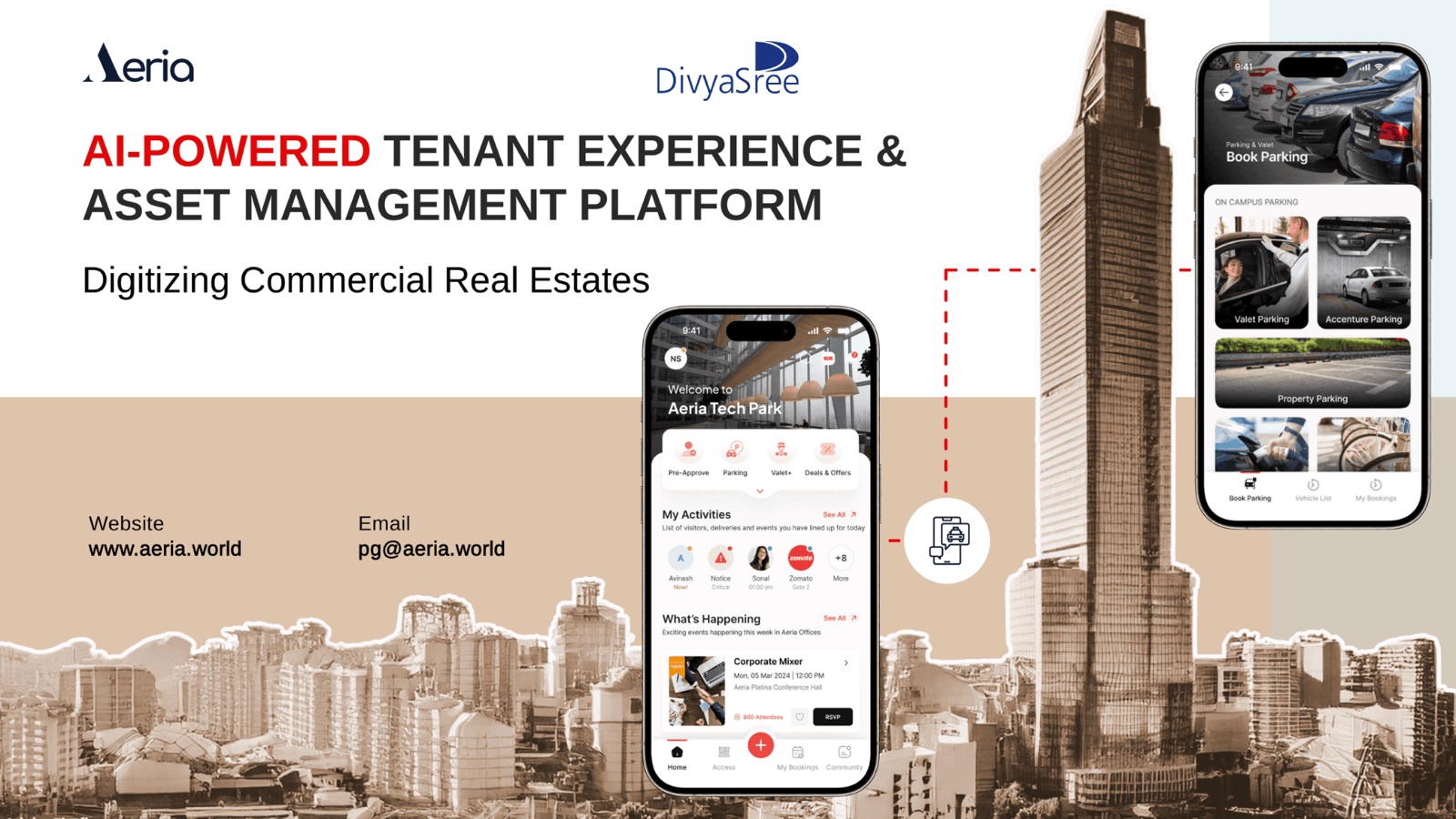
- Aeria TEX, access, visitor, F&B and mobility systems
The problem
What was getting in the way.
Manual work everywhere
Visitors, access, parking, food and complaints depended on people, calls and paper. Every request cost staff time and left no data behind.
Systems that did not talk
Access control, visitor management, tenant platform, F&B, mobility and internal tools each worked alone, so a tenant's day crossed five logins.
Tenants without one place
Employees had no single app for building services, so adoption of any one service stayed low.
Owners without visibility
Asset and operations teams could not see usage, satisfaction or amenity demand, so decisions ran on instinct.
Every site started from zero
Without a repeatable rollout, each building needed fresh planning, training and vendor coordination.
How it solves it
Better days for people, better data for owners.
Tenants and employees
- One app for access, visitors, food, parking and mobility
- Faster check-in with QR and contactless entry
- Events, offers and announcements in one feed
- Complaints and requests tracked to resolution
Landlord and asset managers
- Live data on usage, occupancy and satisfaction
- Fewer manual tasks for security, front desk and facilities
- A platform that connects the systems they already own
- A roadmap to monetise modules beyond one building
Thought process
Six principles I worked by.
Systems before screens
An app is only as good as the systems behind it. I start by mapping access, visitor, F&B, mobility and internal tools, then design the single journey on top.
One tenant journey
The tenant should not know how many vendors exist. They see one app and one flow, from arriving to parking to lunch.
Repeatable by design
Every rollout step becomes an SOP and playbook so site two is faster and safer than site one.
Adoption is the metric
A launch is not success. I track MAU, NPS, CSAT and conversion, and change the journey where they dip.
Modular for growth
Modules are built to stand alone, so they can later be offered to other buildings and owners as a SaaS-led product.
Everyone at the table
Asset Management, Marketing, Operations, Technology, vendors and leadership agree scope early, so change lands without surprises.
What I did
7 workstreams, one outcome.
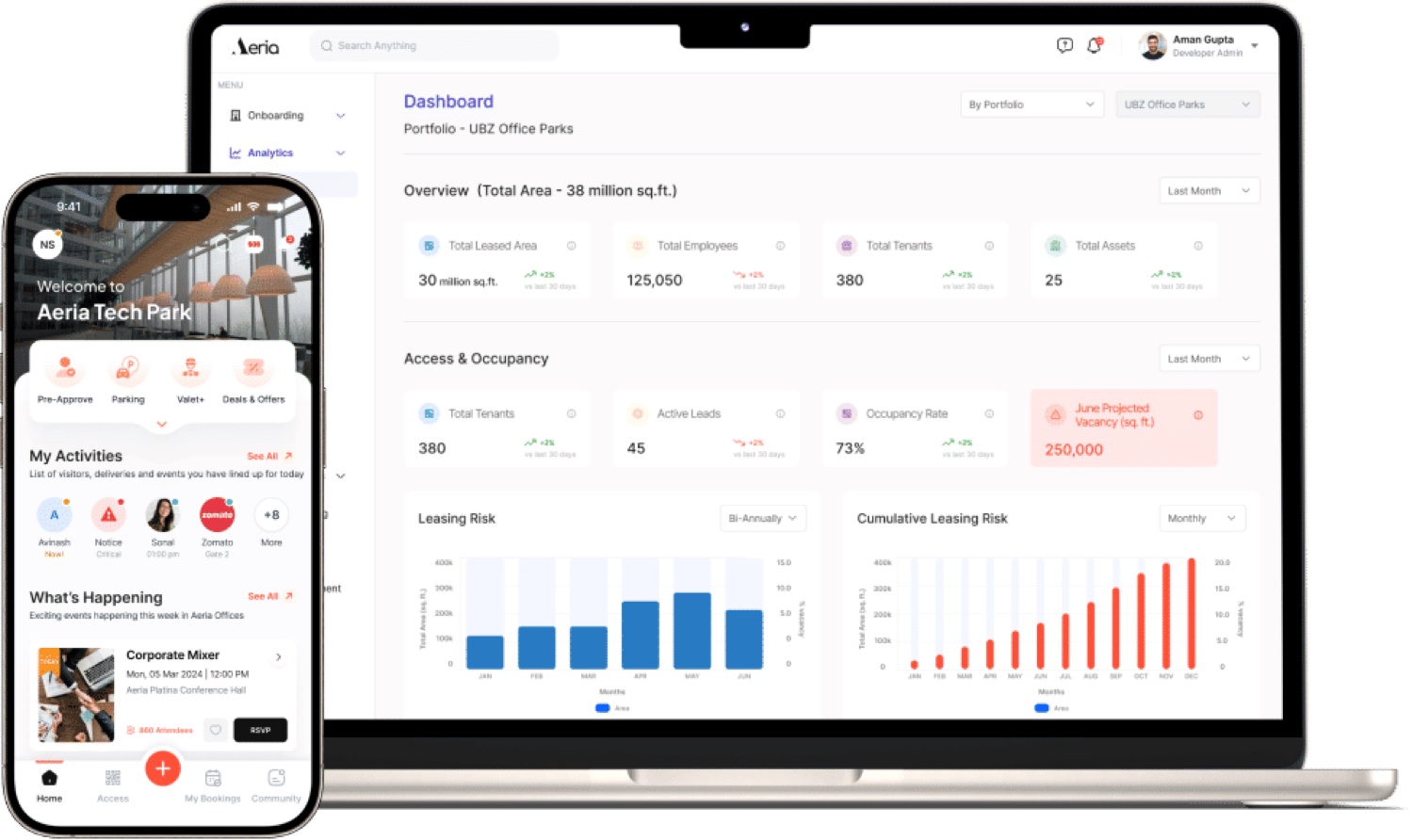
One app for the whole tenant day
ProblemPeople used separate tools, or none, for entering the building and using its services.
- Own the end-to-end digital and experience ecosystem across tenant and enterprise platforms, from solution design and architecture to deployment, adoption and optimisation.
- Run the Aeria TEX platform as the tenant front door, connected to the building's own systems.
- Aeria TEX (iOS app)
- Microservices architecture
- 100+ integrations available
- Role-based admin dashboard
ValueA single, branded entry point that replaces scattered tools and gives owners one dashboard.
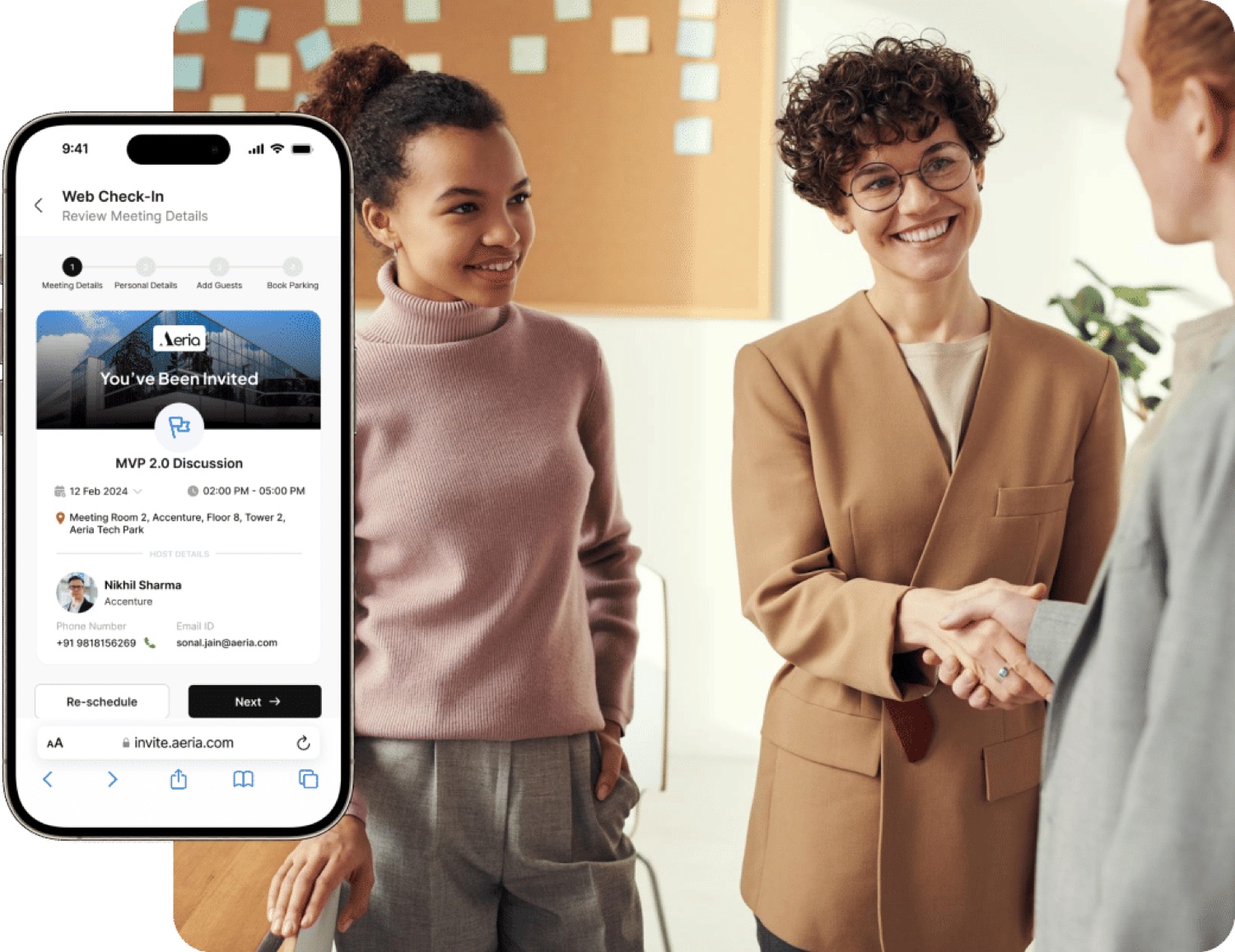
Contactless access and fast visitors
ProblemEntry, passes and visitor registration were slow and manual.
- Connect access control and visitor management to the tenant app so entry works with a phone.
- Define the QR and web check-in flows, parking link and security procedures with operations and vendors.
- QR check-in
- Access control integration
- Parking integration
- Delivery identity checks
ValueShorter queues, fewer calls to the front desk, and a verified record of who entered.
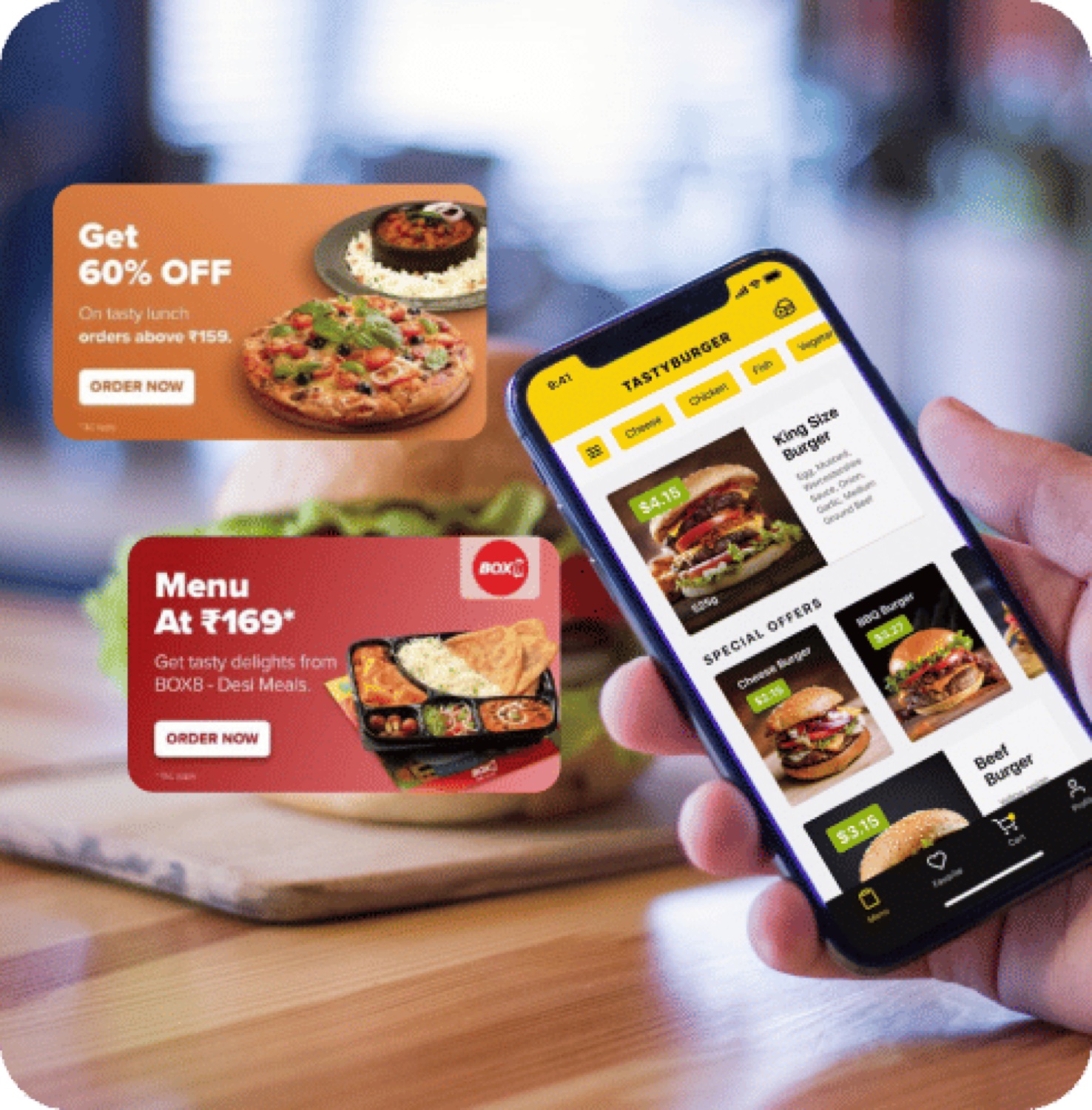
Convenience: food, parking, mobility
ProblemDaily convenience services lived in separate vendor apps or in people's phones and WhatsApp.
- Bring F&B ordering with desk delivery, parking inventory, valet and mobility options into the same app.
- Evaluate vendors on integration quality, security and support before onboarding them.
- F&B ordering
- Parking management
- Micro-mobility and carpool
- Vendor integration
ValueMore use of on-site services for tenants, and measurable demand data for owners.
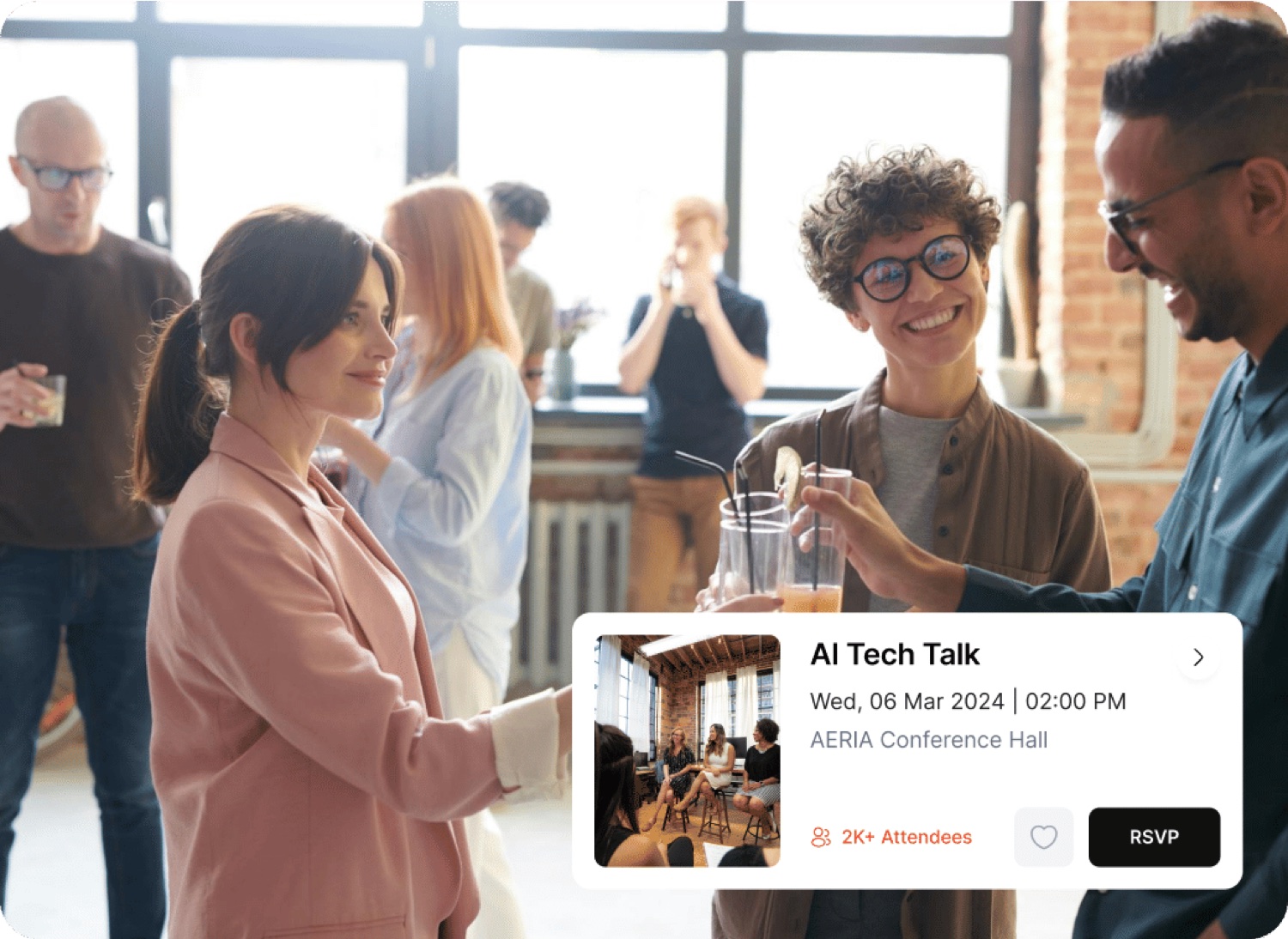
Community, events and offers
ProblemTenants did not feel part of a community, and announcements reached only some people.
- Plan content, events and deals with Marketing and operations, and push announcements through the app.
- Track engagement to see which events and offers earn repeat use.
- Events and announcements
- Deals and offers
- Engagement analytics
ValueA reason to open the app every week, which lifts adoption of every other module.
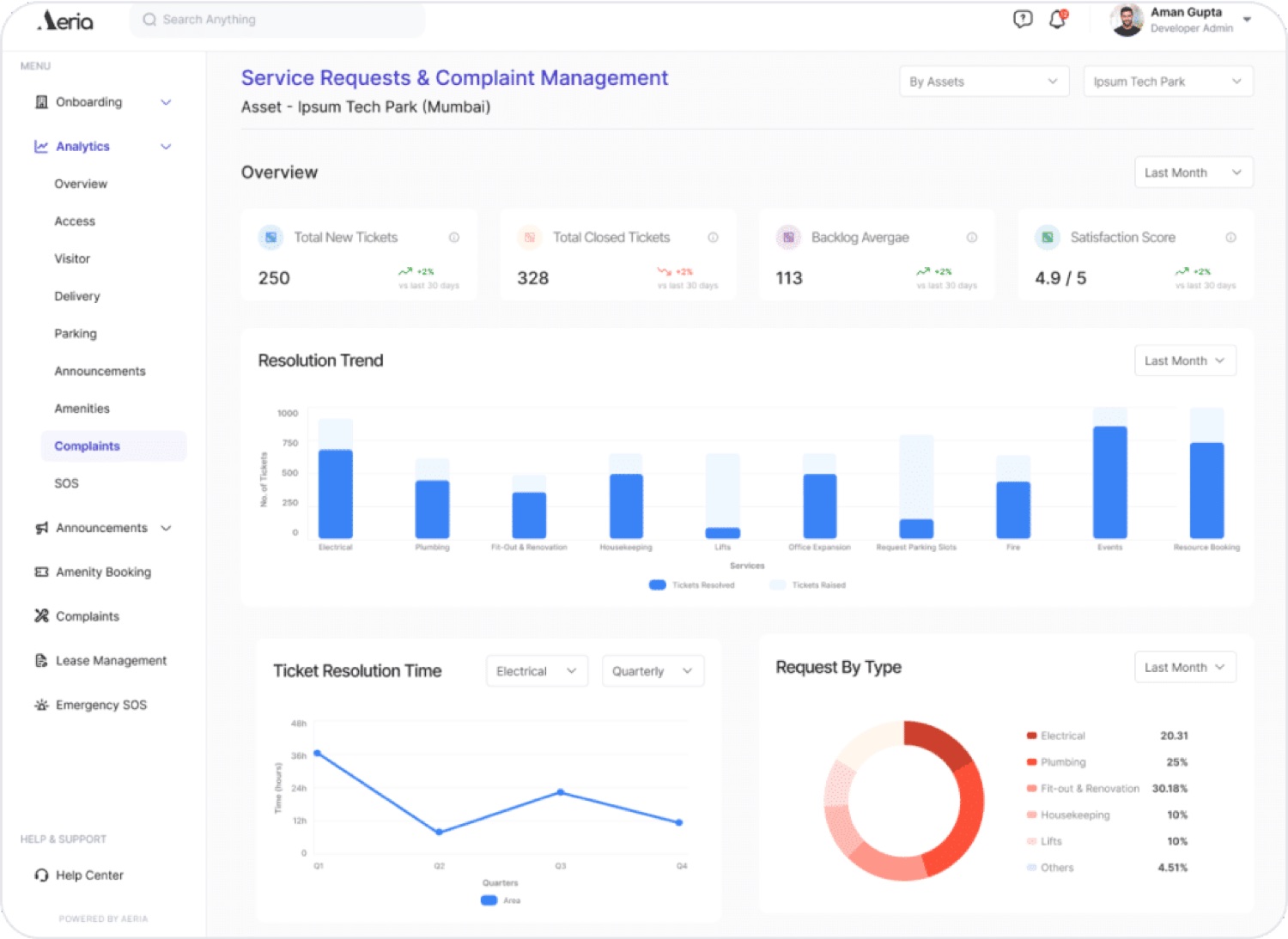
Operations and intelligence
ProblemIssues were handled through calls and ad hoc messages with no tracking.
- Set up complaint tracking and resource booking so every request has an owner and a status.
- Use usage, satisfaction and conversion data to guide amenity and space decisions.
- Complaint management
- Resource booking
- Analytics suite
- AI recommendations
ValueFaster resolution, better use of meeting rooms and amenities, and evidence for CAM and space decisions.
A rollout playbook that repeats
ProblemTechnology went live without the people work that makes it stick.
- Write SOPs, training material and rollout playbooks, and run stakeholder alignment across Asset Management, Marketing, Operations, Technology, vendors and leadership.
- Define launch, adoption and optimisation phases with clear owners.
- SOPs
- Rollout playbooks
- Change management
- KPI dashboards (MAU, NPS, CSAT)
ValueEach new site launches faster, with fewer surprises and a clear adoption target.
A product roadmap beyond one building
ProblemInternal tools solved one site's needs and were not designed to be reused.
- Shape modular digital products with a roadmap for external monetisation.
- Use conversion and retention data to decide which modules to productise first.
- Modular product design
- Roadmap and prioritisation
- Conversion funnels
ValueTurns a cost centre into a possible revenue line.
Approach
From idea to adoption.
- 1
Map
Inventory systems, vendors and tenant journeys
- 2
Design
One journey, one data model, clear ownership
- 3
Integrate
Connect access, visitor, F&B, mobility and tools
- 4
Launch
Training, SOPs, comms and a site playbook
- 5
Optimise
Read MAU, NPS, CSAT and iterate
Toolkit
Platforms and methods
Platform
- Aeria TEX
- iOS and Android apps
- Admin analytics dashboard
Integrations
- Access control
- Visitor management
- Parking and valet
- F&B
- Micro-mobility
Practice
- Stakeholder alignment
- Vendor evaluation
- SOPs and playbooks
- UAT and rollout
- Change management
Measures
- MAU
- NPS
- CSAT
- Conversion
Impact
Scope and what I learned.
systems joined into one tenant journey
core KPIs run: MAU, NPS, CSAT, conversion
stakeholder groups aligned
repeatable rollout playbook
Counts describe scope, not results. Adoption figures for this ongoing programme are not published here.
Integration is the product
Tenants judge the app by whether the door opens and lunch arrives. The back-end work is the real experience.
People first, then tech
SOPs and training move adoption more than a new feature does.
Measure what people do
Usage and satisfaction beat opinions every time.